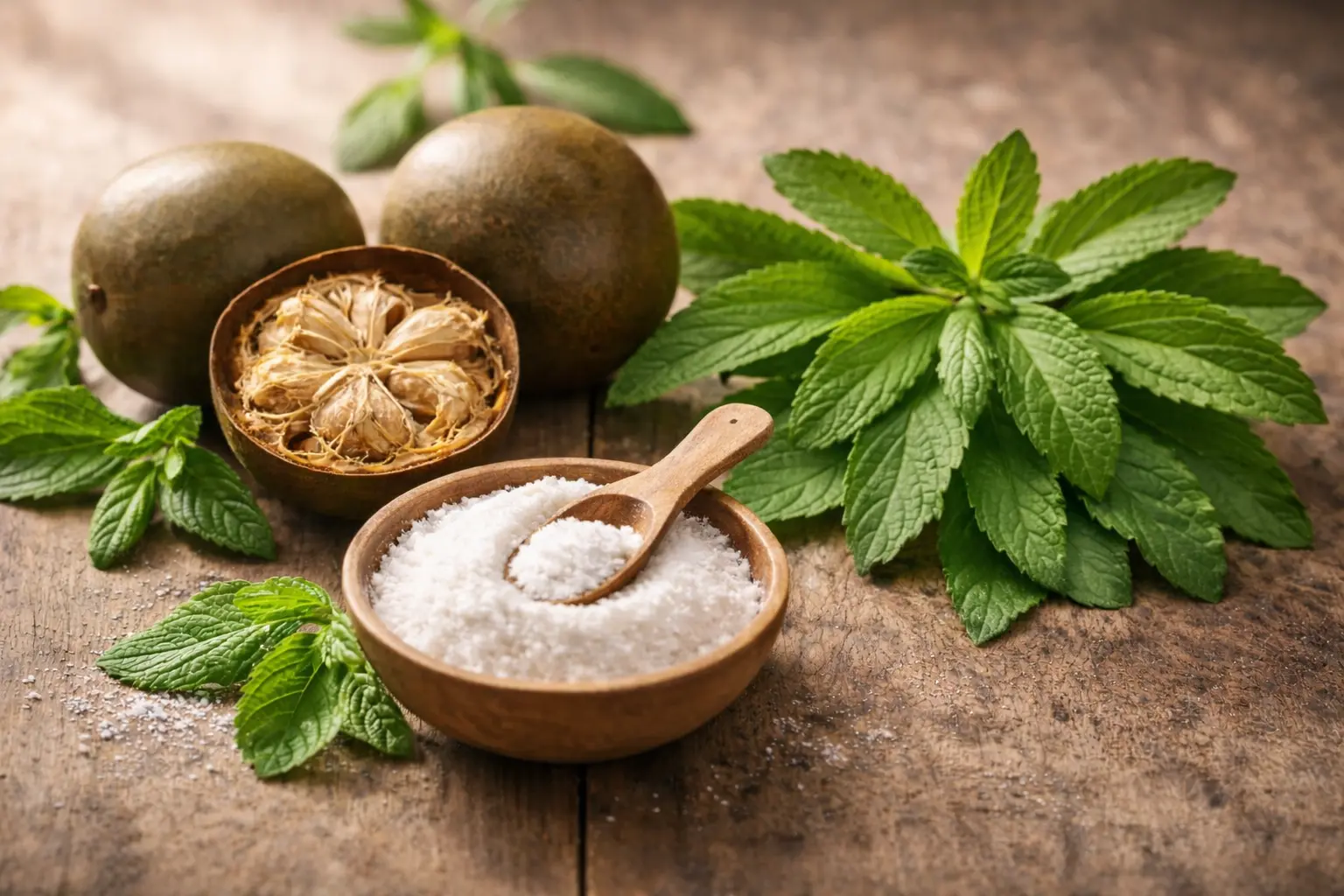
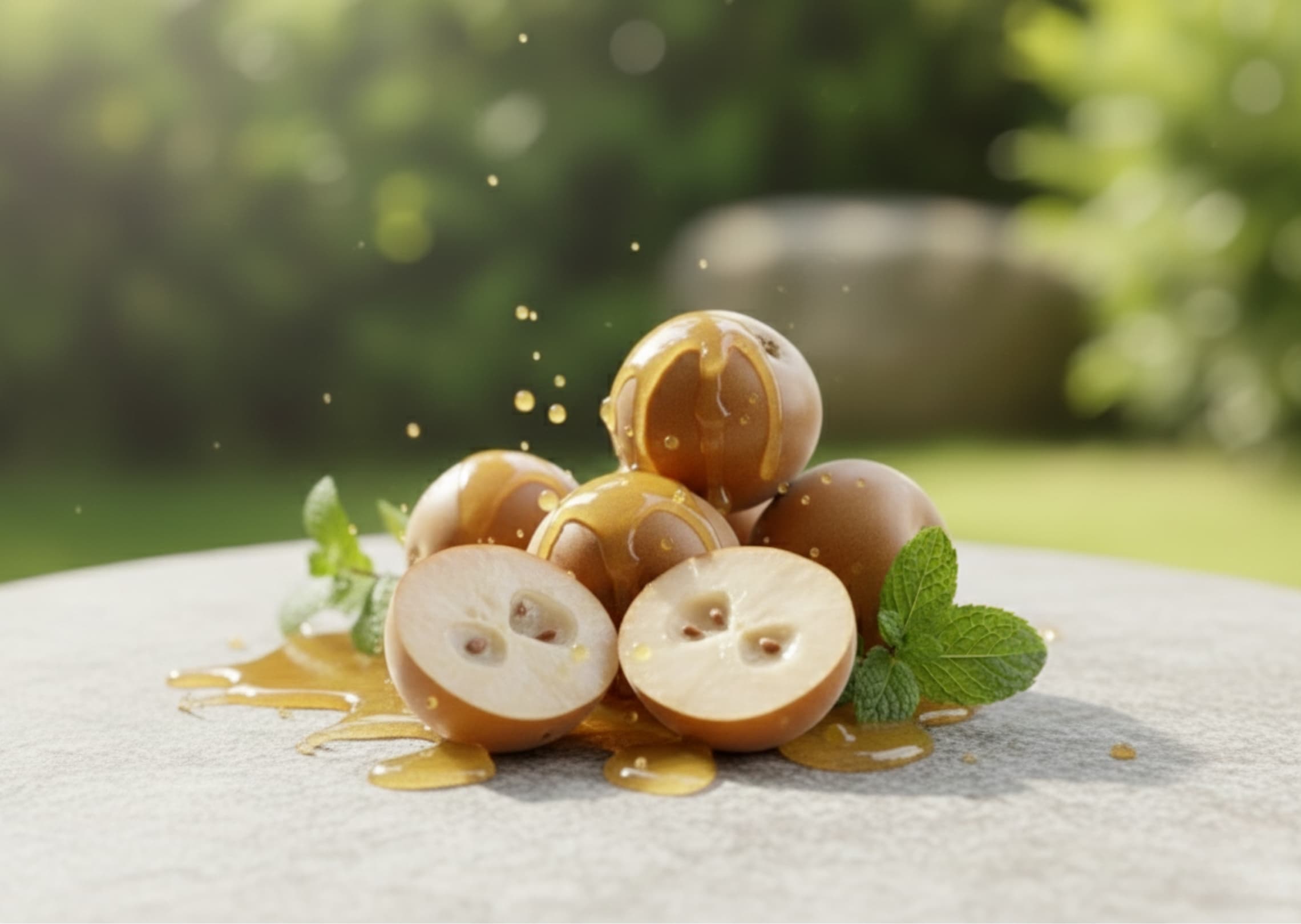
Monk fruit has been used as a natural sweetener in China for over 800 years. Today monk fruit extract Australia-wide is one of the fastest-growing sugar alternatives, valued for its zero-calorie, zero-glycaemic sweetness and clean, plant-based ingredient profile. This article covers where monk fruit comes from, how it works, and why it has become popular among health-conscious Australians.
A Fruit Cultivated by Monks
The story begins in the 13th century in the misty mountains of Guangxi, China. Buddhist monks were among the first to cultivate the small green gourd known as Luo Han Guo (Siraitia grosvenorii), prizing it for its medicinal properties and its extraordinary natural sweetness. They called it the “longevity fruit” - a name that endures to this day.
For generations, monk fruit was used in traditional Chinese medicine to soothe coughs, support digestion, and promote general wellbeing. Its rarity and the difficulty of cultivation meant it rarely left the region. Because the fruit spoils quickly after harvest, monks developed drying techniques to preserve its sweetness and medicinal qualities- techniques that form the basis of modern extraction methods.
The Science Behind the Sweetness
Modern research revealed that monk fruit's intense sweetness comes from compounds called mogrosides - antioxidant-rich molecules that are up to 250 times sweeter than sugar but contain zero calories and zero carbohydrates.
Unlike sugar, mogrosides are not metabolised as carbohydrates in the body. They pass through the digestive system without raising blood glucose or triggering an insulin response. This makes monk fruit fundamentally different from sugar and most other sweeteners - not just lower in calories, but genuinely non-glycaemic.
Mogrosides also carry antioxidant properties, which has made monk fruit a subject of ongoing research into metabolic health and oxidative stress. For a deeper look at how this compares to other natural options, see our monk fruit vs stevia comparison.
How Monk Fruit Reached Australian Kitchens
The extraction of mogroside compounds transformed monk fruit from a regional medicinal ingredient into a globally available natural sweetener. The concentrated extract is shelf-stable, heat-stable, and highly potent - meaning a small bottle lasts months of daily use.
Australia's growing appetite for organic health products and clean nutrition alternatives drove significant demand for monk fruit from the early 2010s onward. Food Standards Australia New Zealand (FSANZ) approved monk fruit extract as a food additive, paving the way for Australian brands to bring it to market in pure, unadulterated form.
Purely U sources certified-organic monk fruit extract and bottles it in Australia, ensuring every drop meets rigorous quality and purity standards. Our Unflavoured 100ml and Unflavoured 50ml concentrates contain monk fruit extract as the sole active ingredient- no fillers, no bulking agents, no artificial additives.
Curious how monk fruit compares to other sweeteners available in Australia? Read our guide to organic monk fruit extract for Australians.
Monk Fruit and Blood Sugar Management
Monk fruit is popular among people managing blood sugar levels for several well-documented reasons:
- Glycaemic index of zero - as a zero calorie sweetener, mogrosides do not raise blood glucose at standard serving sizes
- Zero calories, zero sugar, zero carbohydrates - no hidden nutritional cost per serve, making it a trusted keto sweetener for Australians following low-carb diets
- No insulin response - unlike some sweeteners, monk fruit does not stimulate insulin secretion
- FSANZ and GRAS approved - recognised as safe by both Australian and US food regulators
- Vegan, non-GMO, and gluten-free - a pure monk fruit extract suitable for all dietary preferences
- Antioxidant properties - mogrosides have demonstrated anti-inflammatory and antioxidant effects in laboratory research
For a detailed breakdown of monk fruit and blood sugar, including practical daily use guidance, read our dedicated guide: Monk Fruit and Blood Sugar Management.
How to Use Monk Fruit Every Day
Because Purely U Monk Fruit Concentrate is a liquid, it integrates seamlessly into any eating plan. A few practical uses:
- Sweeten morning coffee or tea - 4 to 6 drops replaces one teaspoon of sugar with zero glycaemic impact
- Add to smoothies and protein shakes for clean post-workout sweetness
- Use in low-carb baking - muffins, pancakes, and cookies that taste indulgent without the glucose hit
- Balance sauces and dressings - teriyaki, barbecue, and vinaigrettes without hidden sugars
For exact serving sizes and conversion ratios, see our complete monk fruit conversion guide. Not sure which product suits your routine? Take our wellness quiz for a personalised recommendation.
From Ancient Monasteries to Your Kitchen
Monk fruit has travelled a remarkable path - from a sacred medicinal fruit tended by 13th-century monks, through modern scientific extraction, to a small concentrated bottle on your kitchen bench. Its combination of history, regulatory approval, and genuine health benefits makes it one of the most compelling natural sweetener Australia has embraced as part of the holistic wellness movement toward cleaner, Australian made wellness products.
As a natural wellness brand in Australia, Purely U is proud to offer monk fruit in its purest form - a healthy sugar substitute and clean nutrition choice for everyday use. Browse the full range or learn more about how we source our ingredients.
Frequently Asked Questions
Where does monk fruit come from?
Monk fruit originates from the mountains of Guangxi province in southern China, where Buddhist monks cultivated it from the 13th century onward. It is now grown commercially in Guangxi and neighbouring regions for global export.
What makes monk fruit sweet if it has no sugar?
Sweetness comes from mogrosides - naturally occurring antioxidant compounds that interact with taste receptors on the tongue but are not metabolised as carbohydrates. This is why monk fruit delivers sweetness with zero calories and zero glycaemic impact.
Is monk fruit safe for people managing blood sugar levels?
Monk fruit has a glycaemic index of zero and does not trigger an insulin response, making it popular among people managing blood sugar levels. It is approved by FSANZ and classified as GRAS by the US FDA. Always consult your healthcare provider before making significant dietary changes.
How does monk fruit reach Australia?
Modern extraction techniques isolate mogroside compounds from dried monk fruit, creating a shelf-stable concentrate that can be transported globally. Purely U sources certified-organic extract and bottles it in Australia.
How is monk fruit different from artificial sweeteners?
Monk fruit is a plant-derived sweetener with an 800-year history of use. Unlike artificial sweeteners such as aspartame or sucralose, monk fruit contains antioxidant compounds and has no artificial processing agents or chemical additives. It is also approved under natural and organic food standards that artificial sweeteners do not meet.
Have more questions? Visit our FAQ page or get in touch with our team.
Tags

Purely U Team
Written by the Purely U wellness team. We are Australian makers of clean-ingredient health and wellness products — HACCP certified, non-GMO, and free from fillers. Our content is reviewed for accuracy and grounded in published nutritional research.
Learn more about us