Iron deficiency is one of the most common nutritional shortfalls in Australia. National survey data has consistently shown that women of reproductive age, vegetarians, athletes, and people with heavy menstrual bleeding are at the highest risk. The standard response is a synthetic iron tablet — but for many Australians, that brings nausea, constipation, or a metallic aftertaste that makes daily compliance difficult.
Whole-food beef liver capsules are a different starting point. Rather than isolating one nutrient, they preserve the full mineral and vitamin profile of the source food. The result is a smaller, gentler dose of iron alongside the cofactors the body uses to absorb and transport it.
What Makes Beef Liver Different from an Iron Tablet
The iron in beef liver is haem iron — the form found in animal foods. Haem iron is absorbed through a dedicated transporter in the gut and is not significantly affected by other dietary factors. Non-haem iron, the form in plants and most synthetic tablets, is absorbed less efficiently and is heavily influenced by what you eat alongside it. Tea, coffee, and calcium-rich foods all reduce non-haem iron absorption.
Beef liver also delivers vitamin B12 and folate naturally, both of which are required for red blood cell formation. Most iron tablets contain iron alone. If a person is deficient in B12 or folate as well, isolated iron supplementation will not fully resolve the underlying picture.
Tolerability matters too. Many Australians stop taking iron tablets because of digestive side effects. Whole-food capsules typically deliver a smaller iron dose per serve and tend to be easier on the stomach, which makes them more sustainable as part of a long-term routine.
What Is Actually in Beef Liver Capsules
Quality beef liver capsules are made from a single ingredient: freeze-dried liver from grass-fed cattle. Freeze-drying removes the water without applying heat, which preserves the heat-sensitive vitamins and the natural enzyme content of the food.
A single 4-capsule serve typically delivers naturally occurring vitamin A, vitamin B12, folate, iron, and CoQ10, plus smaller amounts of zinc, copper, and choline. None of these are added — they are simply present in liver as a food. That distinction matters because nutrients delivered in their food matrix come packaged with the cofactors needed for absorption.
The source of the liver matters as well. Grass-fed Australian beef liver from pasture-raised cattle has a different fatty acid profile and a higher concentration of fat-soluble vitamins than grain-finished equivalents. For Australian buyers, sourcing locally also reduces the regulatory ambiguity that comes with imported organ meats.
How Many Beef Liver Capsules for Iron Support
A typical daily serving sits at 4 to 6 capsules with water, taken with or without food. Some people prefer a morning dose, others prefer to spread the serve across two meals to support tolerance.
For comparison, that is meaningfully less iron per day than a standard prescription iron tablet, which is the point. Whole-food capsules are designed to support nutritional status as part of a varied diet, not to treat clinically diagnosed anaemia. If a doctor has diagnosed iron deficiency anaemia and prescribed a high-dose iron tablet, follow that guidance.
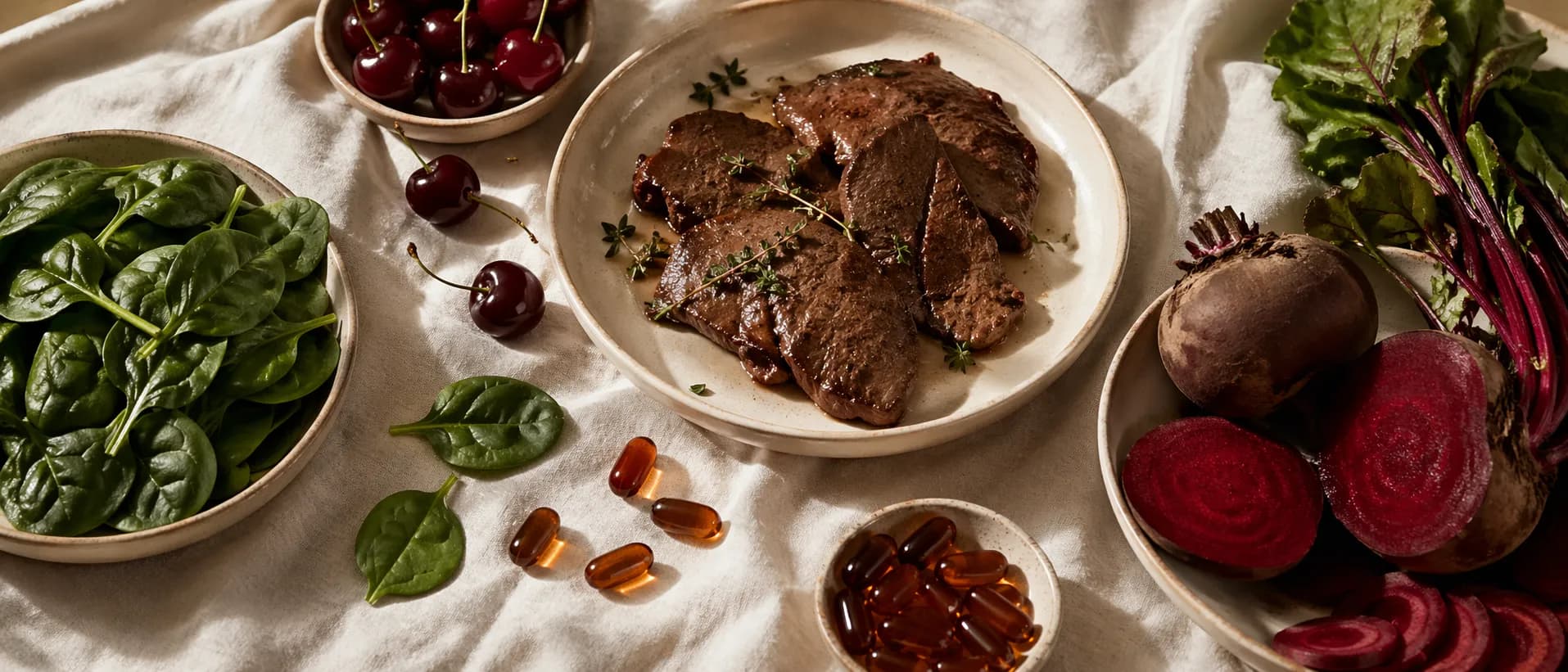
Combining whole-food capsules with iron-rich meals — red meat, legumes, leafy greens — and a source of vitamin C in the same meal will support absorption. For more on Australian dietary baselines, see our piece on common Australian mineral shortfalls.
Who Should Be Cautious
Beef liver capsules are not appropriate for everyone. The two key considerations are vitamin A and pregnancy.
Liver is naturally high in preformed vitamin A (retinol). At the serving sizes recommended on capsule labels, intake stays within safe ranges for most adults. Pregnant women, however, are advised to keep preformed vitamin A intake low because excess can carry risk to the developing baby. Pregnant women should consult their healthcare provider before starting any beef liver supplement.
Vegans and vegetarians will obviously not use a beef liver product. For plant-based readers seeking iron support, a combination of legumes, wholegrains, and vitamin-C-rich vegetables remains the cornerstone, with clinical iron supplementation guided by blood work.
People with haemochromatosis — a condition where the body absorbs and stores too much iron — should also avoid additional iron sources unless directed by a clinician.
How to Choose a Beef Liver Capsule
Read the label. The cleanest products list a single ingredient: freeze-dried beef liver. Avoid blends padded out with rice flour or magnesium stearate. Confirm the cattle were grass-fed and pasture-raised and check that manufacturing meets Australian food safety standards.
Capsule count and serving size matter for value. A 190-capsule bottle at a 4-capsule serve gives you roughly seven weeks of daily use, which is a reasonable trial window to assess how the product fits your routine.
The Purely U Prime Liver formula is freeze-dried Australian grass-fed beef liver. One ingredient, 190 capsules per bottle, manufactured in Australia. It is currently in pre-launch — you can register on the waitlist to be notified when it goes live.
The Honest Bottom Line
Beef liver capsules are not a magic fix for iron deficiency. They are a whole-food source of iron, B12, folate and other cofactors that the body recognises and uses. For Australians with low-normal iron levels who struggle to tolerate standard iron tablets, they are a sensible option worth discussing with a healthcare provider.
For diagnosed anaemia, follow medical advice. For everyday nutritional support, whole-food capsules sit comfortably alongside a varied diet.
Tags

Purely U Team
Written by the Purely U wellness team. We are Australian makers of clean-ingredient health and wellness products — HACCP certified, non-GMO, and free from fillers. Our content is reviewed for accuracy and grounded in published nutritional research.
Learn more about us