
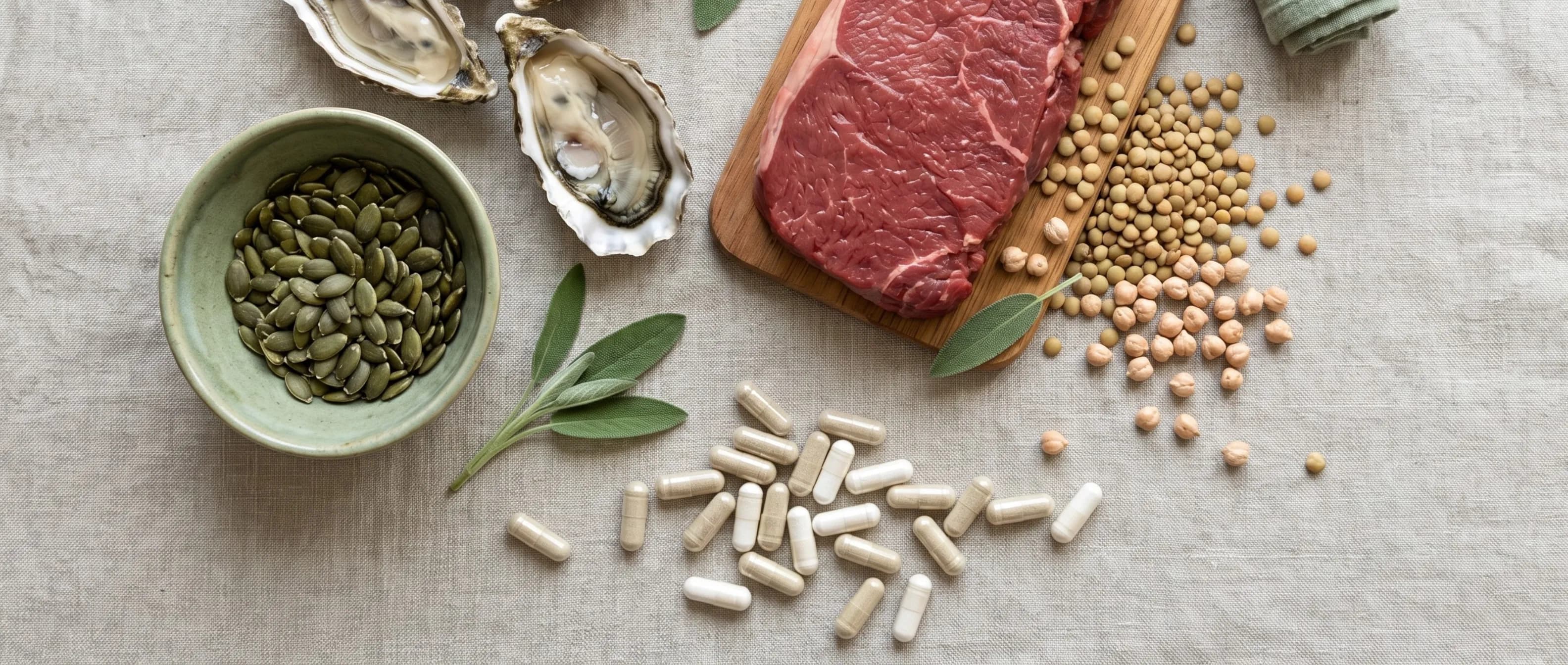
Zinc is one of those minerals most Australians rarely think about until a doctor mentions it. Yet it is essential for immune function, wound healing, taste and smell, hormone production, skin health, and the synthesis of more than 300 enzymes in the human body. When intake drops even modestly below requirement, the symptoms are subtle enough to miss for months.
Australian dietary surveys have consistently shown that a meaningful share of adults sit at or below the recommended daily intake for zinc. It is not a dramatic deficiency story like iron deficiency anaemia, but it is a quiet shortfall that affects more people than the headlines suggest.
Signs of Low Zinc
Mild zinc deficiency is rarely diagnosed because the symptoms are non-specific and overlap with many other conditions. The most commonly reported signs include:
- Frequent colds, slow recovery from minor illness, and slow wound healing
- Hair shedding more than usual, brittle or peeling nails
- Reduced sensitivity to taste or smell, sometimes mistaken for ageing
- Skin problems including acne, eczema, or persistent dry patches
- Mood changes, low motivation, or a vague sense of brain fog
- White spots on fingernails — often suggested as a zinc indicator, though not strongly evidence-based
Severe zinc deficiency, which is rare in Australia outside of specific clinical contexts, can cause growth delays in children, reproductive and fertility problems in adults, and significant immune dysfunction. Most cases seen in Australian general practice are milder than that — but mild does not mean unimportant.
Who Is Most at Risk in Australia
Several groups carry an elevated risk of low zinc intake or absorption:
- Vegetarians and vegans, because plant foods generally contain less zinc and the zinc that is present is bound to phytates that reduce absorption.
- Older adults, who often have lower energy intake overall and reduced absorption efficiency.
- Pregnant and breastfeeding women, whose zinc requirements are higher.
- People with digestive conditions like coeliac disease, inflammatory bowel disease, or short bowel syndrome, where absorption is impaired.
- Heavy alcohol drinkers, because alcohol increases urinary zinc excretion and reduces absorption.
- People taking high-dose iron supplements, which can compete with zinc for absorption.
Athletes, particularly endurance athletes, also lose meaningful amounts of zinc through sweat. For most casual exercisers this is not a significant concern, but for serious training loads it adds up.
Australian Dietary Data
The Australian Bureau of Statistics National Nutrition Survey has shown that a meaningful share of adults — particularly women — fall short of the recommended daily intake for zinc. The RDI in Australia is 14mg per day for adult men and 8mg per day for adult women, with slightly higher targets during pregnancy and breastfeeding.
Part of the issue is that zinc-rich foods have shifted out of the modern Australian diet. Red meat consumption has dropped, oysters and organ meats are eaten infrequently, and processed convenience foods deliver minimal zinc. The shift toward plant-forward eating is nutritionally positive in many ways, but it requires more deliberate attention to bioavailable mineral sources.
For an in-depth comparison of synthetic and whole-food zinc, see our piece on natural zinc vs synthetic zinc.
How to Get More Zinc
Food first. The most effective way to maintain zinc status is to eat zinc-rich foods regularly. The standout sources for Australian diets are:
- Oysters — by a wide margin the most zinc-dense food available. A small serve covers most of an adult's daily zinc requirement.
- Red meat — beef and lamb provide highly bioavailable zinc in regular portion sizes.
- Pumpkin seeds and cashews — the highest-zinc plant sources, useful for vegetarians.
- Chickpeas and lentils — moderate zinc, with absorption improved by soaking, sprouting, or fermenting.
- Wholegrain bread and oats — small amounts that add up across the day, again with the phytate caveat.
Pairing plant zinc sources with vitamin C in the same meal helps absorption. Soaking or sprouting legumes and grains reduces their phytate content. These small habits add up.
When food alone is not enough, a whole-food supplement made from freeze-dried oysters provides naturally chelated zinc alongside the cofactors — copper, iodine, selenium — that the body uses with it. Synthetic zinc tablets work in the right dose for the right person, but long-term use of high-dose synthetic zinc carries the risk of copper depletion that whole-food sources avoid.
How to Tell If You Need Help
If you suspect a zinc shortfall based on symptoms, the next step is a conversation with a GP rather than self-diagnosis. Serum zinc testing is available in Australia, but it has limitations — blood zinc levels do not always reflect tissue stores accurately. A clinician will consider your dietary history, symptoms, and overall blood work together.
Avoid jumping straight to a high-dose synthetic supplement. If your intake is genuinely low, a smaller increase from food and whole-food sources will usually correct the picture without the side effects or copper-balance risks of long-term high-dose tablets.
The Honest Bottom Line
Zinc deficiency in Australia is not the dramatic emergency that some wellness marketing implies. It is a quiet shortfall that affects more people than they realise, with symptoms vague enough to be confused with stress, ageing, or general fatigue.
The fix is not complicated. Eat more whole-food zinc sources. Pay attention to bioavailability if you eat plant-forward. Test before supplementing at high doses. For Australians who want a clean, whole-food top-up, freeze-dried Tasmanian oyster capsules are a sensible addition — you can register on the waitlist for the Purely U formula.
Tags

Purely U Team
Written by the Purely U wellness team. We are Australian makers of clean-ingredient health and wellness products — HACCP certified, non-GMO, and free from fillers. Our content is reviewed for accuracy and grounded in published nutritional research.
Learn more about us