
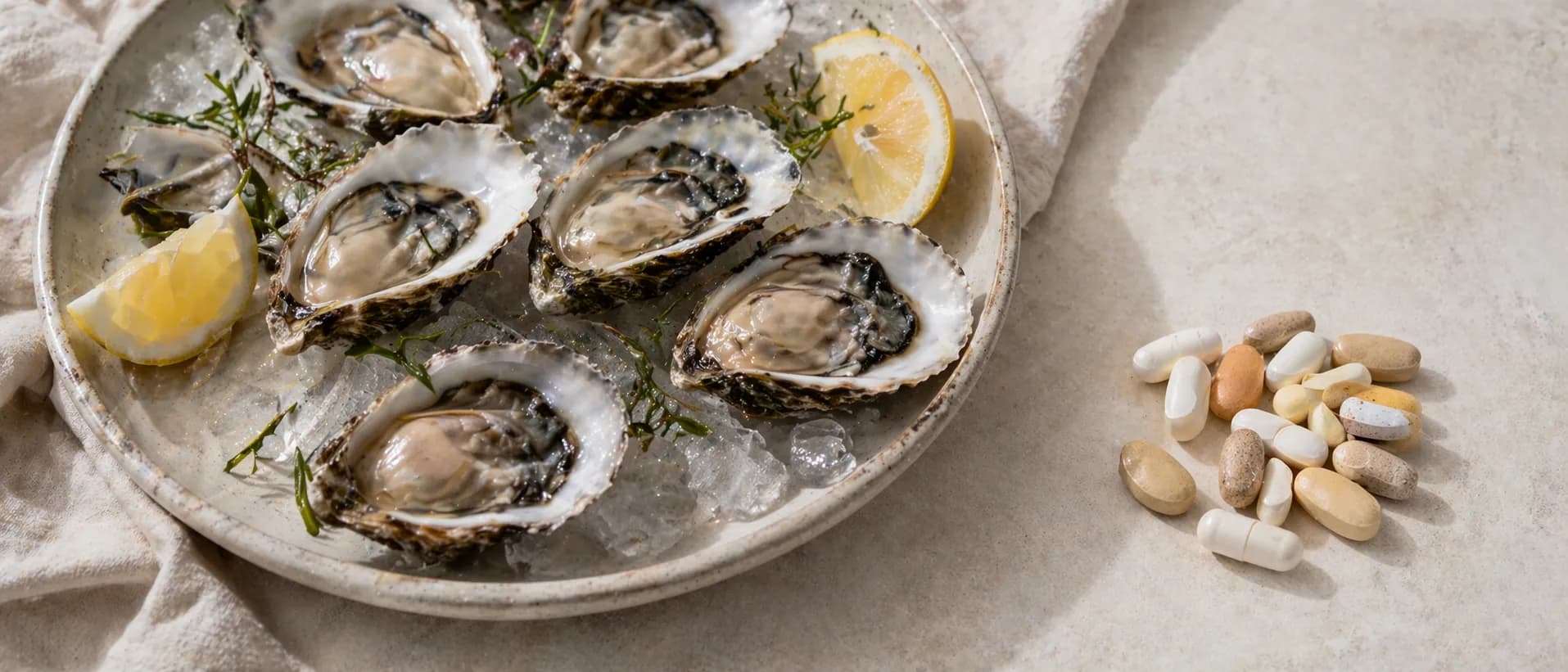
Walk into any Australian pharmacy and the zinc shelf will be dominated by tablets containing zinc oxide, zinc citrate, or zinc gluconate. They are inexpensive, well-studied, and widely available. They are also synthetic — manufactured in a lab and delivered to the body in isolation.
At the other end of the shelf sits whole-food zinc — capsules made from freeze-dried oysters, which happen to be the most zinc-dense food on earth. Per gram of food, nothing comes close. The two products both deliver zinc, but the experience your body has of each is meaningfully different.
The Different Forms of Zinc in Supplements
Synthetic zinc supplements come in many chemical forms. The form affects absorption, tolerability, and cost.
- Zinc oxide is the cheapest and most common form. It has the lowest bioavailability of the major forms — studies have measured absorption rates substantially below other options.
- Zinc gluconate is widely used in cold and immune formulas. Bioavailability is moderate and tolerability is generally good.
- Zinc citrate shows better absorption than zinc oxide and is comparable to zinc gluconate in most studies.
- Zinc picolinate and zinc bisglycinate are chelated forms — the zinc is bound to an amino acid carrier. These typically show the highest absorption among synthetic options and are usually well tolerated on an empty stomach.
Most mass-market multivitamins use zinc oxide because it is cheap. If you take a multivitamin and assume you are getting your zinc covered, check the label.
What Whole-Food Zinc Looks Like
Oysters contain naturally chelated zinc — bound to amino acids inside the food itself. This is essentially what the high-end synthetic forms try to replicate. The difference is that in oysters, the chelation is accompanied by everything else the food contains: copper, iodine, selenium, B12, and a small amount of natural protein.
Per gram, oysters deliver more zinc than any other commonly available food. A single 75-gram serve of fresh oysters can exceed the entire adult daily zinc requirement. Freeze-drying concentrates the food further, which is what makes oyster capsules a viable everyday option for people who do not enjoy fresh oysters or do not have regular access.
The whole-food package matters. Zinc and copper, for example, work in a delicate balance in the body. Synthetic high-dose zinc can disrupt that balance. Oyster-sourced zinc arrives with copper already in the ratio that food evolution has settled on.
The Zinc-Copper Balance Problem
This is one of the underdiscussed risks of long-term synthetic zinc supplementation. Zinc and copper share an absorption pathway in the gut. Sustained high-dose zinc — particularly above 40 to 50mg of elemental zinc per day for months or years — can suppress copper absorption and lead to copper deficiency.
Symptoms of copper deficiency include fatigue, anaemia (copper is required for iron metabolism), neurological changes, and a weakened immune response. The tricky part is that some of these overlap with the signs of low zinc, which can lead people to take more zinc when copper is the actual issue.
Whole-food zinc from oysters reduces this risk because the natural zinc-to-copper ratio is preserved. You are not getting an isolated mega-dose of one mineral while the other is missing.
What Else Is in Oyster Capsules
Beyond zinc and copper, freeze-dried oyster capsules deliver a meaningful trace mineral profile.
- Iodine, naturally present in seafood, supports thyroid hormone production. Australian dietary iodine intakes are generally low, with a small amount of fortification in iodised salt and bread.
- Selenium, an antioxidant cofactor required for thyroid and immune function. Australian soils are relatively selenium-poor, so dietary selenium often comes from imported foods or seafood.
- Vitamin B12, naturally bound in animal foods and not available from plant sources without fortification.
- Naturally occurring taurine, an amino acid involved in cardiovascular and nervous system function.
For many of these, the daily contribution from a 2 to 4 capsule serve is meaningful but not excessive — exactly the profile you want from a whole-food top-up.
Who Should Be Cautious
Oyster capsules contain shellfish. Anyone with a shellfish or mollusc allergy must avoid them. Read the allergen statement on every product carefully.
Pregnant women should always discuss any new supplement, including whole-food capsules, with their healthcare provider. The general principle is that food-derived supplements at sensible serving sizes are usually safer than concentrated synthetic doses, but individual circumstances matter.
How to Choose a Quality Oyster Capsule
Source matters more than dose. Tasmanian oysters are farmed in some of the cleanest waters in the world, with strict food safety oversight. Imported oyster powder of unknown provenance carries higher contamination risk for heavy metals like cadmium, which oysters can accumulate from polluted waters.
Read the ingredient list. The cleanest products contain a single ingredient: freeze-dried oyster. Avoid products bulked out with rice flour, magnesium stearate, or filler powders.
Purely U Tasmanian Oyster capsules are 100% freeze-dried oyster from clean Tasmanian waters. No fillers, no synthetic minerals. Register on the waitlist to be notified when they go live.
The Honest Bottom Line
Synthetic zinc tablets work. They are well-studied, regulated, and effective at correcting clinically diagnosed deficiency, particularly in higher chelated forms. For most people, however, a daily whole-food source of zinc — eaten regularly as part of a varied diet, or supplemented in capsule form when oysters are not on the menu — offers a more balanced nutritional package and a lower risk of long-term zinc-copper imbalance.
For more on Australian mineral gaps and how they show up in everyday symptoms, see our piece on zinc deficiency in Australia.
Tags

Purely U Team
Written by the Purely U wellness team. We are Australian makers of clean-ingredient health and wellness products — HACCP certified, non-GMO, and free from fillers. Our content is reviewed for accuracy and grounded in published nutritional research.
Learn more about us